Why Laptop Battery Hour Claims Disagree
Lenovo publishes three battery life figures for the same 57Wh ThinkPad: 17.11 hours, 15.5 hours and 30.6 hours. Nothing about the machine changes between them, only the test and the screen brightness. This guide reads the battery rows on Apple's and Lenovo's own specification pages, checked October 15, 2026.
This article is a documentation review: it is based on the vendors' own published pages, checked on the date shown. We may earn a commission from some links; it never affects what we recommend.

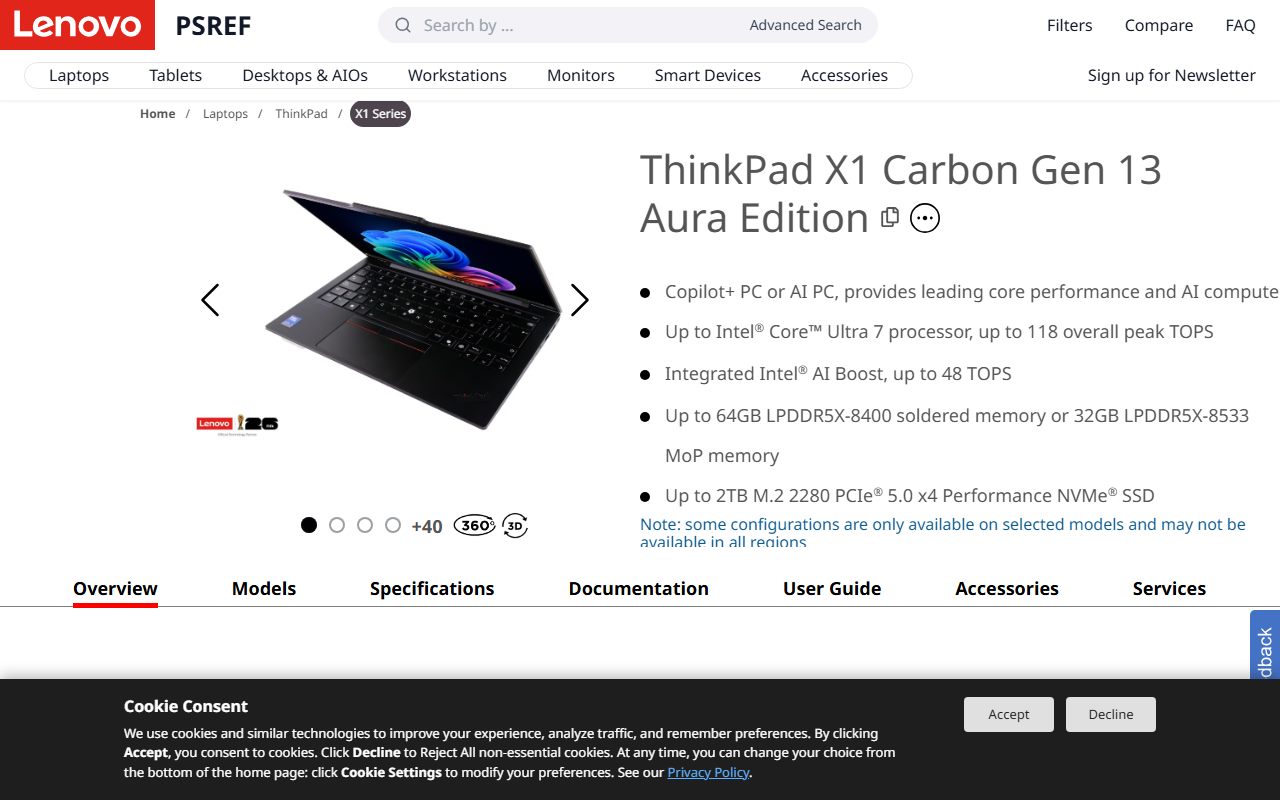
Lenovo publishes three battery life figures for the same laptop with the same 57Wh battery: 17.11 hours, 15.5 hours and 30.6 hours. Nothing about the hardware changes between them. Only the test method and the screen brightness change, and both are printed right next to the number. That makes a laptop's hour claim the least portable figure on the page and its watt-hour rating the most useful one. This guide reads the battery rows on Apple's MacBook Air specifications page and Lenovo's PSREF entry for the ThinkPad X1 Carbon Gen 13 Aura Edition, checked October 15, 2026.
Watt-hours is the one battery row measured the same way everywhere
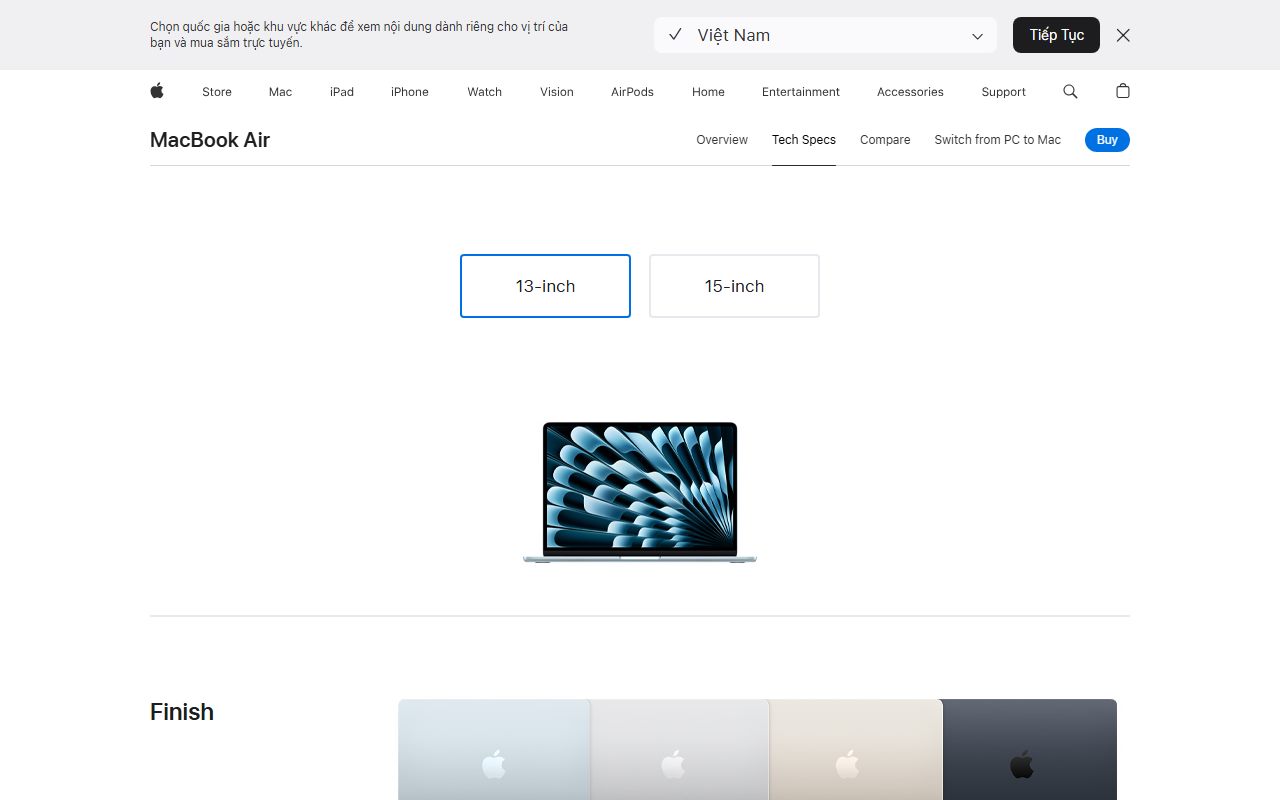
Apple publishes capacity plainly. The MacBook Air specifications page lists a "Built-in 53.8-watt-hour lithium-polymer battery" for the 13-inch and a "Built-in 66.5-watt-hour lithium-polymer battery" for the 15-inch, checked October 15, 2026.
Lenovo does the same. The PSREF entry states "57Wh Rechargeable Li-ion Battery, supports Rapid Charge (charge up to 80% in 1hr)" across every configuration listed.
A watt-hour is energy, so it compares cleanly across brands. Hours are energy divided by an assumed power draw, and the assumption is the part that moves.
This is the same split that makes refresh rate comparable while response time is not, a pattern set out in monitor specs that change what you actually see.
One laptop, three published methods, three different hour counts
Lenovo prints all three rather than picking a winner. For its first listed configuration the page states "MobileMark 25: up to 17.11 hr with 549 performance score @250nits", checked October 15, 2026.
Directly beneath it sits "JEITA-BAT 3.0 (Video/Idle): up to 15.5 hr / 35.6 hr @200nits" and then "Local video playback: up to 30.6 hr @150nits". Three numbers, one battery, a spread of 15 hours.
The alternate configuration shifts them again. With a Core Ultra 5 225H in place of the 225U, the same page lists 16.8 hr on MobileMark 25, 13.9 hr on JEITA video and 28 hr on local playback.
Lenovo also publishes the method list in its footnote: claims are "approximate maximum and based on results using MobileMark 25, JEITA 3.0, continuous 1080p local video playback" or the Google Power Load Test.
BAPCo, which publishes MobileMark 25 itself, returned an HTTP 403 to every request made for this guide on October 15, 2026, so the description of that benchmark above is Lenovo's wording rather than the test owner's.
Brightness is written into the claim, not left to the reader
Every Lenovo figure carries a brightness. MobileMark 25 runs at 250 nits, JEITA at 200 nits and the local video figure at 150 nits, which is the dimmest setting and the longest result.
Apple states brightness differently. Its testing footnote says all systems were tested "with display brightness set to 8 clicks from bottom and keyboard backlight off", a setting that cannot be converted into nits from the page.
The ordering is not a coincidence. A panel is one of the largest continuous loads in a thin laptop, so the dimmest test produces the longest headline and the brightest test produces the honest one.
Appliances show the same effect with a different variable. A rated figure measured in a small sealed chamber flatters the product, which is why room size is printed alongside the airflow rating in how to read an air purifier spec sheet.
Divide watt-hours by hours to see the draw the maker assumed
The arithmetic is worth doing because it exposes the assumption. By editorial arithmetic, Apple's 53.8Wh battery lasting 18 hours of video streaming implies an average draw of about 2.99 watts.
The same battery lasting 15 hours of wireless web implies about 3.59 watts, by the same arithmetic. Browsing 25 websites costs roughly 20 percent more power than streaming video in Safari on these figures.
Lenovo's spread is wider. By editorial arithmetic, 57Wh over 30.6 hours implies about 1.86 watts, while 57Wh over 15.5 hours implies about 3.68 watts, a factor of two from test choice alone.
A battery specification is complete when it states all of this:
- Capacity in watt-hours, not in milliamp-hours without a voltage
- The named test behind every hour figure, such as MobileMark 25 or JEITA-BAT 3.0
- Screen brightness during that test, in nits where possible
- The exact configuration tested, including processor, memory and storage
- Whether the machine tested was production or preproduction hardware
- Charger wattage and the charging standard it uses
- Battery warranty, which is often shorter than the system warranty
Cross-brand hour comparisons do not survive the footnotes
Apple's 18 hours and Lenovo's 30.6 hours are both video playback figures, and they are still not comparable. One streams over Wi-Fi in a browser; the other plays local files in a desktop media player at 150 nits.
Apple's own footnote adds a second gap. Its figures come from "Testing conducted by Apple in January 2026 using preproduction" systems configured with 16GB of memory and a 512GB SSD, which is one configuration out of many on sale.
The screen size comparison inside one brand is more informative. The 15-inch Air carries 66.5Wh against the 13-inch 53.8Wh, about 24 percent more energy by editorial arithmetic, and claims identical hours.
In other words the larger battery pays for the larger panel and buys no extra runtime. That is a useful thing to know before paying for the bigger machine on battery grounds.
Charger figures travel with the battery. Lenovo lists a "65W USB-C (2-pin) AC adapter, supports PD 3.0", while Apple lists a "40W Dynamic Power Adapter with 60W Max" and notes fast charging needs "70W or higher".
Bottom line
Compare watt-hours first, because that row means the same thing on every page. Treat hour claims as a package of three things: a number, a named test and a brightness.
When a page gives hours with no test name attached, there is nothing to compare it against. Divide the watt-hours by the claimed hours and judge whether the implied draw matches the work you actually do.
The habit of reading the measurement conditions before the number carries across every category on this site, from how to read printer page yield to how to read a wireless headphone spec sheet and the warranty wording in how to read a standing desk spec sheet.
Running cost is the one battery question that needs no benchmark. The method for turning a wattage figure into money is the same one used for appliances in SACC versus ASHRAE BTU on a portable AC spec sheet.
Frequently asked questions
Why does one laptop have three different battery life numbers?
Because three different tests produced them. Lenovo's PSREF page lists 17.11 hr on MobileMark 25 at 250 nits, 15.5 hr on JEITA-BAT 3.0 video at 200 nits and 30.6 hr on local 1080p playback at 150 nits, all for the same 57Wh battery.
Is a bigger watt-hour rating always better battery life?
Only against the same load. The 15-inch MacBook Air carries 66.5Wh against the 13-inch 53.8Wh, about 24 percent more by editorial arithmetic, yet both claim up to 18 hours of video streaming because the larger panel consumes the difference.
What is MobileMark 25?
A battery life benchmark published by BAPCo and cited by Lenovo at 250 nits with a performance score attached. BAPCo's own page returned an HTTP 403 to requests made for this guide on October 15, 2026, so this description comes from Lenovo's footnote.
How do I estimate real runtime from a spec sheet?
Divide watt-hours by claimed hours to get the assumed average draw. Apple's 53.8Wh over 18 hours implies about 2.99 watts by editorial arithmetic. If your work is heavier than the test, expect proportionally fewer hours.
Does screen brightness really change the result that much?
On these figures, yes. Lenovo's longest claim is measured at 150 nits and its shortest at 250 nits, and the implied draw moves from about 1.86 watts to about 3.68 watts by editorial arithmetic across the same battery.
Why do makers test preproduction machines?
Timing: specifications publish before retail units ship. Apple states its figures come from testing conducted in January 2026 on preproduction systems with 16GB of memory and a 512GB SSD, which is a disclosure rather than a problem, but it does narrow what the number covers.
Sources
- Apple MacBook Air technical specifications, battery and power (checked Oct 15, 2026)
- Lenovo PSREF, ThinkPad X1 Carbon Gen 13 Aura Edition product specifications (checked Oct 15, 2026)
- BAPCo MobileMark 25 product page (returned HTTP 403 on the date checked) (checked Oct 15, 2026)