What IP Ratings and Water Resistance Cover
Apple rates one watch at 100 metres of water resistance and then states it should not be used below 40 metres. The gap is not a contradiction; it is the difference between a pressure test and a permission. This guide reads the IP code against IEC's own scope statement and Apple's published footnotes, checked October 15, 2026.
This article is a documentation review: it is based on the vendors' own published pages, checked on the date shown. We may earn a commission from some links; it never affects what we recommend.
Apple rates one watch at 100 metres of water resistance, then states on the same page that it should not be used below 40 metres. That is not a contradiction. It is the difference between a pressure test result and a permission to go swimming, and almost every water claim on a gadget page hides a version of the same gap. This guide reads the IP code against the scope the IEC publishes for it, then against Apple's own footnotes for phones and watches, checked October 15, 2026.
An IP code has two digits and either one can be withheld
The first digit describes protection against solid objects, the second against liquids. When a maker has not certified one of them, the convention is to print an X in its place, and the X is the most informative character on the label.
Apple's Apple Watch comparison page does exactly this. It lists "Certified IP6X dust resistant" for its current watches, which claims the dust digit and declines the water digit entirely.
The reverse appears on the same page for an older model: "Apple Watch Series 1 has a water resistance rating of IPX7 under IEC standard 60529", which claims water and declines dust.
So an IP code is two separate certifications printed as one token. A product advertising "IP68" has claimed both; a product advertising "IP6X" or "IPX7" has claimed one and is telling you so.
IEC 60529 classifies enclosures, not swimming
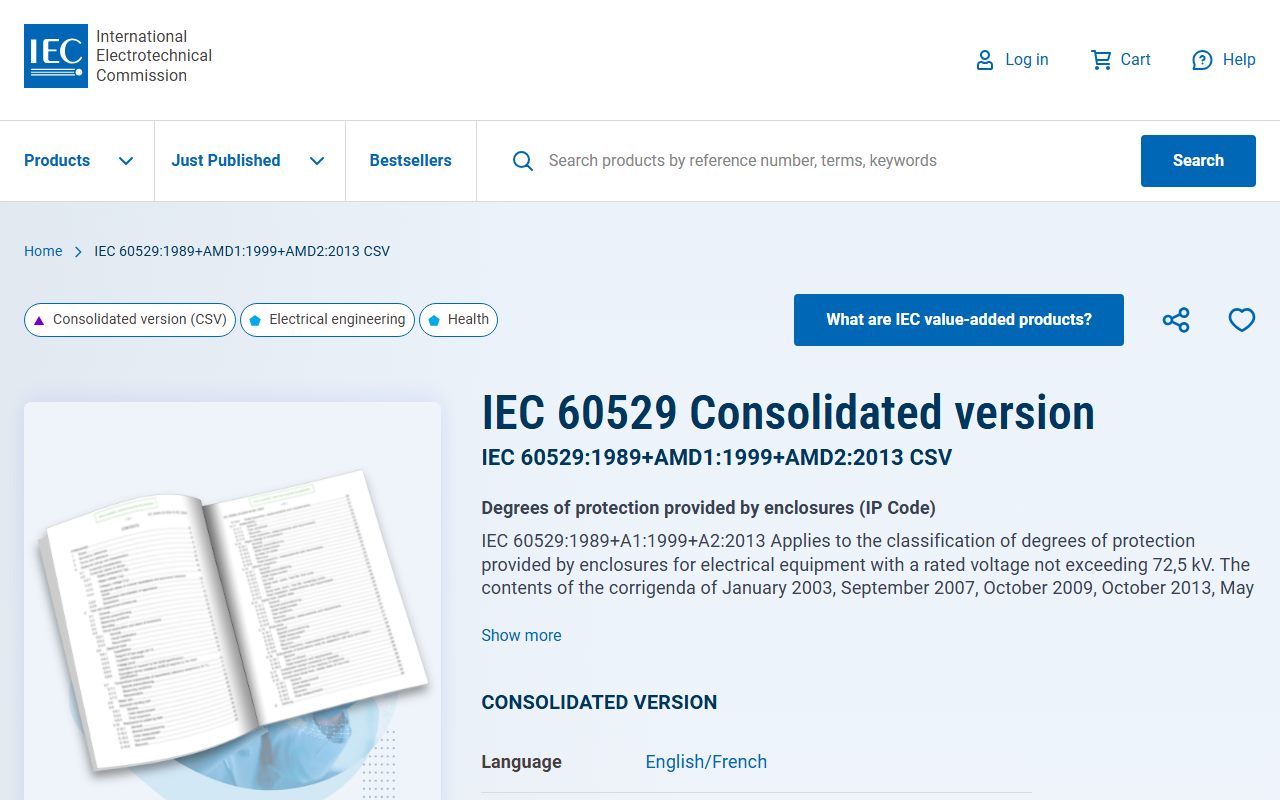
The standard behind the code is narrower than its reputation. The IEC webstore entry titles it "Degrees of protection provided by enclosures (IP Code)", checked October 15, 2026.
Its stated scope is industrial rather than recreational. The entry says it "applies to the classification of degrees of protection provided by enclosures for electrical equipment with a rated voltage not exceeding 72,5 kV".
The version in force is also older than most devices citing it. The consolidated publication is "IEC 60529:1989+AMD1:1999+AMD2:2013", a 1989 standard with amendments from 1999 and 2013.
A number tied to a named, dated standard is the only kind that compares across brands. That is the same test applied to the endurance figures in what SSD endurance ratings actually promise.
The depth and the minutes are vendor statements beside the code
Apple attaches both to its phone claim. The iPhone specifications page states the current models "were tested under controlled laboratory conditions with a rating of IP68 under IEC standard 60529 (maximum depth of 6 meters up to 30 minutes)".
Read the sentence structure rather than the number. The depth and the duration sit in a parenthesis after the code, because they are what this maker tested to, not something the two digits fix on their own.
The practical consequence is that two devices both marked IP68 need not survive the same dunking. Without the depth and the minutes printed next to the code, the code alone does not support a comparison.
Apple also names the conditions: "controlled laboratory conditions". A spec produced under a stated condition is worth more than a bigger spec produced under none, which is the recurring lesson in why laptop battery hour claims disagree.
Watches use different standards, and the number is not a permission
Apple cites three separate bodies for one wrist. Dust comes from IEC 60529 as IP6X, water comes from ISO and diving comes from a European standard, each printed as its own row.
The water row reads: "Apple Watch Series 2 and later and Apple Watch SE and later have a water resistance rating of 50 meters under ISO standard 22810:2010", with shallow-water activities such as pool and ocean swimming named as suitable.
The same footnote rules activities out. It states they "should not be used for scuba diving, waterskiing, or other high-velocity water sports", so 50 metres is a static pressure rating rather than a depth allowance.
The Ultra models make the gap explicit. The page gives them "a water resistance rating of 100 meters under ISO standard 22810:2010", permits recreational scuba "to 40 meters", and then states they "should not be used below 40 meters".
That is a 60 metre difference between the rating and the permitted use, by editorial arithmetic. The extra margin exists because pressure in motion is not pressure at rest.
Diving gets its own certification again. The comparison page lists "EN13319 certification" as a separate row, alongside "Depth to 40m / 130 ft" for the models that carry it.
A complete water and dust specification states all of this:
- The full IP code, with any X left visible rather than rounded up
- The standard and its year, such as IEC 60529 or ISO 22810:2010
- Tested depth and duration, where the maker publishes them
- The activities the maker names as suitable, and those it rules out
- Whether the rating is described as permanent or as degrading with wear
- Whether liquid damage is covered by the warranty
- Any separate certification for diving or other specialist use

A rating is not a warranty, and the pages say so
Apple states the limit twice in different words. On the phone page: "Splash, water, and dust resistance are not permanent conditions. Resistance might decrease as a result of normal wear."
On the watch page: "Water resistance is not a permanent condition and can diminish over time." Both are honest disclosures and both mean the label describes a new device.
The commercial consequence is printed plainly: "Liquid damage not covered under warranty". A rating describes a test the product passed once, not an obligation the maker takes on afterwards.
That split between a measured figure and a contractual one is the same one that separates endurance from warranty on a drive, and the same one hiding inside the regional warranty clauses in what microSD speed class labels guarantee.
Bottom line
Read the code character by character and notice every X. Then look for the standard's name and year, and for the depth and duration, because the code alone carries none of those.
Treat an activity list as more useful than a metre figure. Apple's own pages show a 100 metre rating paired with a 40 metre limit, which no single number could have told you.
Assume the rating applies to the device as sold and degrades from there, and assume liquid damage is excluded unless a page says otherwise.
The same read-the-conditions habit applies to the certified airflow figures in how to read an air purifier spec sheet and to the yield method in how to read printer page yield.
It applies to display claims too, where a certified tier beats a bare adjective, as monitor specs that change what you actually see sets out.
Frequently asked questions
What does the X in IP6X or IPX7 mean?
It means that digit was not certified. Apple lists "Certified IP6X dust resistant" for current watches, claiming dust protection only, and "IPX7 under IEC standard 60529" for the Series 1, claiming water protection only. An X is a disclosure, not a zero.
Are all IP68 devices equally waterproof?
No. The depth and duration are stated separately by each maker. Apple's iPhone footnote adds "(maximum depth of 6 meters up to 30 minutes)" after the code, so without that parenthesis the two digits do not support a comparison.
Can I swim with a watch rated 50 metres?
Apple's footnote names pool and ocean swimming as suitable for its 50 metre models under ISO 22810:2010, while ruling out "scuba diving, waterskiing, or other high-velocity water sports". The metre figure is a pressure rating, not a depth allowance.
Why can a 100 metre watch not go below 40 metres?
Because the rating and the permission are different claims. Apple rates Ultra models at 100 metres under ISO 22810:2010, permits recreational scuba to 40 metres and states they should not be used below that, a 60 metre margin by editorial arithmetic.
Is water damage covered if my device has an IP rating?
Not on these pages. Apple states plainly that "liquid damage not covered under warranty" and that resistance "might decrease as a result of normal wear". The rating records a laboratory test, not a commitment to repair.
Which standard should I look for on a water claim?
IEC 60529 for the IP code on electronics, ISO 22810:2010 for watch water resistance, and EN13319 where diving is claimed. Apple cites all three on one product line, which is a sign the rows are not interchangeable.
Sources
- IEC webstore, IEC 60529 Degrees of protection provided by enclosures (IP Code) (checked Oct 15, 2026)
- Apple iPhone technical specifications, splash and water resistance footnote (checked Oct 15, 2026)
- Apple Watch comparison page, water resistance and dust resistance rows and footnotes (checked Oct 15, 2026)